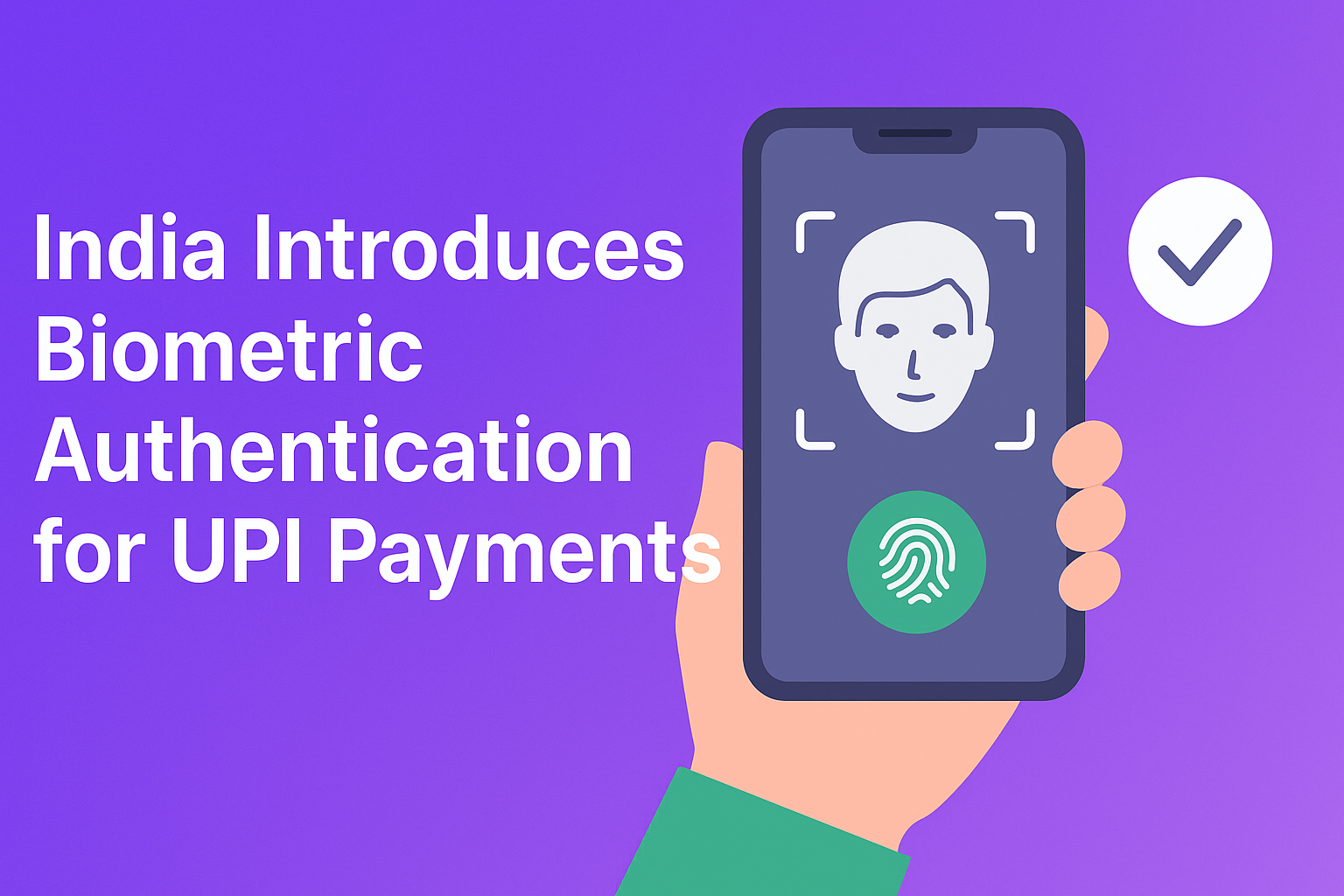

🇮🇳 India Introduces Biometric Authentication for UPI Payments
Face & Fingerprint Scans to Replace PINs for Faster, Safer Digital Transactions
Overview
India’s digital payment revolution is taking another major leap. Starting October 2025, the National Payments Corporation of India (NPCI) and the Reserve Bank of India (RBI) have launched biometric authentication for UPI—allowing users to approve payments using fingerprint or facial recognition, instead of a PIN.
Your UPI app can now use your phone’s face unlock or fingerprint scanner to verify payments securely and instantly.
Why It Matters
- UPI’s scale: Handles over 13 billion transactions monthly.
- Convenience: No more typing or remembering PINs.
- Inclusion: Easier for elderly and new users.
- Security: Minimizes fraud and shoulder surfing.
What’s Changing
1. On-Device Biometric Approval
Works directly with your phone’s fingerprint or face unlock. Verification happens locally—no data shared with the bank or NPCI.
2. Aadhaar-Based Face Authentication
Uses Aadhaar’s verified facial data via UIDAI’s secure gateway. Mostly for UPI PIN setup or reset with user consent.
Rollout Date: October 8, 2025
First Pilots: SBI, Paytm Payments Bank, PhonePe, Google Pay
How It Works
- Enable biometrics in your UPI app settings.
- Authenticate once using fingerprint or face ID.
- During payment, verify biometrically.
- Once verified, payment completes instantly.
Tip: High-value payments (above ₹5,000) may still need a UPI PIN.
Benefits for Users
| Feature | Benefit |
|---|---|
| 🧾 No PIN Hassle | Faster checkout at stores and online |
| 👵 User Friendly | Ideal for elderly and beginners |
| 🔒 Improved Security | Harder to steal than PINs |
| ⚡ Instant Authentication | One-tap confirmation via biometrics |
Security & Privacy Concerns
- On-device only: Biometrics stay encrypted in your phone.
- Aadhaar-based: Uses UIDAI’s secure gateway with consent.
- Anti-spoofing: Prevents photo or video frauds.
- Privacy laws: Protected under India’s Digital Personal Data Protection Act.
Tip: Always enable biometric lock and remote-wipe options on your phone.
Impact on Stakeholders
- Consumers: Faster, simpler, secure payments.
- Banks & PSPs: Need to upgrade backend APIs.
- Merchants: Quicker checkouts, fewer dropouts.
- Fintech Startups: New innovation opportunities.
What to Expect Next
- Phase 1: Pilot rollout with select banks.
- Phase 2: Integration across major UPI apps.
- Phase 3: Expansion to offline & wearable payments.
Works best on devices with secure fingerprint/face modules.
FAQs
Q1. Is biometric authentication mandatory?
➡️ No, it’s optional. The UPI PIN still works.
Q2. Is my fingerprint stored by NPCI?
➡️ No. It remains encrypted on your device.
Q3. What if I lose my phone?
➡️ Use “Find My Device” to erase data and contact your bank.
Q4. Does it work on all phones?
➡️ Only on devices with certified biometric hardware.
Expert Take
“This move marks a major milestone in India’s journey toward frictionless and inclusive digital payments. However, strong consent, privacy safeguards, and user education are essential for success.”
— Digital Payments Analyst, Fintech Forum 2025
Conclusion
India’s biometric authentication for UPI marks a next-generation shift in digital finance—merging speed, safety, and simplicity.
It could redefine how over a billion Indians transact—from local shops to online purchases.
Sources
- The Indian Express – UPI Biometric Authentication Explained
Visual Suggestions
- Feature Image: “Pay with Face ID” illustration
- Infographic: Biometric UPI flow steps
- Comparison Chart: PIN vs Biometric
- Security Icons: Locks and fingerprint visuals
Current Affairs: Click Here
Job Updates: Click Here
SSC Official website: Click Here